Toby Amies is a documentarian that uses himself as a storytelling device. The sincere first-person interview style of his Great Gardenseries, The Man Whose Mind Exploded, and now In the Court of the Crimson King: King Crimson at 50 introduces audiences to what he lovingly calls “monomaniacal” characters in vulnerable states. Toby’s presence appears through his disembodied voice, engaging film subjects with compassion and creating space for viewers to fill. It’s an immersive style of filmmaking that adds layers to every project.
On this edition of the Cinephellas Podcast I’m chatting with director Nicholas Bushman about the DVD and Blu Ray releases of his movie Union Furnace, both out on August 15th. Union Furnace tells the story of Cody, a small-town criminal, played by Mike Dwyer, with little going for him. After crashing a stolen car, the mysterious Lion, played by the brilliantly sadistically Seth Hammond, offers Cody the chance for financial security and a way out of their small Ohio town. The only condition is that Cody must win an 8 round life or death competition against other town misfits. Only by avoiding death can he begin living.
On this episode of the Cinephellas podcast we have my conversation with the multitalented Blake Freeman. We’re discussing his new comedy, All About the Money. Blake wrote the screenplay, directed, produced, and stars in the film. But he consistently points out that the project was only possible thanks to the community of people he worked with, both behind the scenes and in front of the camera. He’s got some great co-stars, including Eddie Griffin and Casper Van Dien. This is Eddie’s return to the big screen after about two years doing other projects. And Casper gives a great performance playing against his usual all-American type. Blake also gave me some info about his upcoming TV project based on tech and gaming culture. It’s a timely look at contemporary digital culture.
On this episode of the Cinephellas podcast I’m talking to the Peter Spirer and Peter Baxter, co-directors of Spirit Game: Pride of a Nation. The documentary uses lacrosse, which the Iroquois nation calls its “medicine game,” as a lens through which to explore Iroquois history and indigenous peoples’ relationships with the United States and Canada. How is it, the film asks, that countless schools and universities across North America play teach the game to its students without relating its ceremonial past? To answer that question, the Peters and I discuss the Catholic Church’s oppressive Doctrine of Discovery, the Iroquois challenges to traditional ideas of sovereignty, and how sports can be used as a tool for activism. Spirit Game is a powerful statement about how popular culture can help change the world for the better.
In February 2017 NASCAR announced a new partnership with FOX and NBC to increase racing broadcast rights. The agreement ensures major network support of billions of dollars through the 2024 Monster Energy Cup Series. This initiative is not only a push to increase viewership with familiar demographics like the American South. It’s also a plan to develop fan bases across the United States. NASCAR and its cousin, IndyCar, are the most visible manifestations of a motor sports revolution that’s taken America by storm since the 1979 Daytona 500, considered by many to be the most important race in NASCAR history. But that narrative ignores the hidden figures who never achieve multi-million dollar paychecks, corporate sponsorship, or televised glory. They race for the love the sport. Viewers are lucky to get the chance to meet these heroes in Kevin Burroughs’ documentary Smash: Motorized Mayhem, which hits VOD platforms and iTunes today.
The film, produced by XLrator Media, follows several performerswho share personal stories about the role burlesque performance plays in their lives. Angelique DeVil, Zora Von Pavonine, Babs Jamboree, Stage Door Johnnies, Sandria Dore’, Isaiah Esquire, Violet Ohmigod, Russell Bruner, and Ivizia Dakini each give nuanced perspectives that elevate our understanding of burlesque from sexual objectification to artistic empowerment. And that’s just the beginning. I got the chance to discuss Burlesque: Heart of Glitter Tribewith Mr. Manning before it hits theaters March 3rd and VOD platforms/iTunes on March 7th. We chatted about giving burlesque a unique identity, the role comedy plays in generating intimacy, and how burlesque shows help build community.
Imagine this article is playing out before your eyes like a television show. The screen is black. The Foo Fighters’ song “Next Year” plays as we fade in on a familiar scene and the voiceover says, “Last time on “TV, Myself, & I.” We flashback to Part I of this article in which I discuss the Four Factors of Televisual Familiarity, or the major reasons certain television shows become significant in our lives. A montage of clips illustrates the following examples:
Finding shows during transformative periods in our lives.
Someone we love turning us onto a particular show and sharing it with them.
Shows with sex appeal and characters we find desirable.
Programs that help us develop professional dreams and attitudes we carry into adulthood.
Finally, in a dramatic cliff hanger, the voice-over reminds you that these categories often overlap and a personal case study of my relationship with the cult-favorite Ed is promised for Part II. You laugh. You cry. You get a new plate of nachos. And we’re back.
The intimacy of watching television is different than bonding with movies or music. Whenever I enter new periods of confusion in my life, I make it a point to rewatch the The Graduate (1967) or blast the electric “I-don’t-give-a-fuck” Live 1966 “Royal Albert Hall” version of Bob Dylan’s “Like a Rolling Stone.” I pursue the familiar wisdom born of disillusionment in these pieces of art because it’s comforting and gives me hope. Television shows come to me as ever-changing episodes that demand my attention in the present moment. Whatever happens in my life between these installments informs my perspective on the stories and characters.
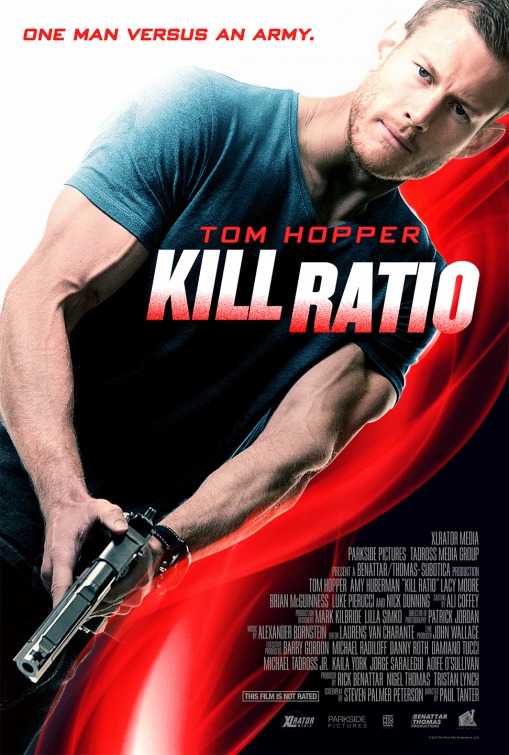
The nation’s slow recovery from the 2016 Presidential Election has reminded us about the deep divisions in the United States. But the election and its preceding campaign gave me many thought-provoking conversations with friends, family, and colleagues. One such conversation came with Tom Hopper, star of the new action thriller Kill Ratio.
Kill Ratio is a departure for the English actor, best known for his roles in the the drama Black Sails and the fantasy-adventure Merlin. In the Paul Danter-directed Kill Ratio, Tom takes on the role of James Henderson, a lone wolf protecting a small European country from a military coup as it transitions to a democratic government. Four days before the election, Tom and I discussed the importance of democratic government, his personal political journey, and how he just can’t stop sword fighting. He even clued me in on a new passion project close to his heart. I was captivated by Tom’s insight and wit. I hope you will be, too.





 Cinephellas