Camera Obscura: Interview with Director Aaron B. Koontz

Looking Beyond Eyes: An Interview with Aaron B. Koontz

By Christopher M. Rzigalinski

Schedules can be hectic. My flight back to Los Angeles from a wedding in New York and director Aaron B. Koontz’s packed press schedule meant that we couldn’t talk directly. But our good friends at the Katrina Wan Press Agency had our backs. Samantha Arevalo and Camelia Adibi forwarded my questions to Aaron so the Cinephellas community could get some insight into his artistic process, being a first-time director, and why he wanted to tackle Post Traumatic Stress Disorder in the new film Camera Obscura. I’d like to thank Samantha, Camelia, and Aaron for taking time out of their busy schedules, and I hope Aaron’s answers get you as hyped for the movie as I am.

Continue reading

Cinephellas Podcast – Episode 8 (Matthias Hoene Interview)

The Representation Game: A Conversation with Matthias Hoene


by Christopher Rzigalinski

Pop culture products like movies and TV shows help us recognize social issues that need discussing. If we’re lucky, they enlighten us in entertaining ways. Sometimes they even make us uncomfortable because they force us question our own beliefs. Enter the Warriors Gate, the latest film from director Matthias Hoene, does all that work and more.

Continue reading

Cinephellas Podcast – Episode 7 (Olson Brothers Interview)

A Conversation with the Olson Brothers

by Chris Rzigalinski

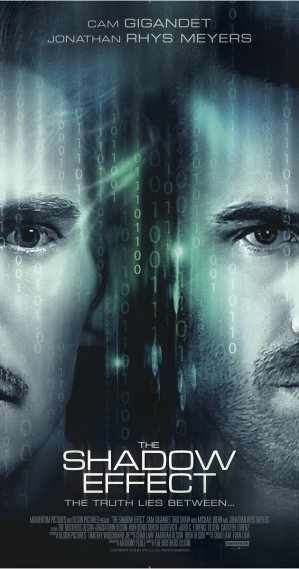
It’s hard enough directing a movie when one intelligent mind is behind the camera. But brothers Obin and Amariah Olson find a way to merge two brilliant perspectives. Their latest project, The Shadow Effect, explores the consequences of trauma on Gabriel (played by Cam Gigandet), an ex-Navy Seal unaware he’s in the throes of a scientific experiment. As a result, the lines between reality and imagination are blurred. Gabriel must figure out if his murderous flashbacks are delusions or if the mysterious Dr. Reese (Jonathan Rhys Meyers) is manipulating him. Along the way, Gabriel is forced to question the sincerity of the people closest to him, including his wife, Brinn (Britt Shaw).

Continue reading

Cinephellas Podcast-Episode 6 (Alexander Nevsky Interview)

Cinematic Diplomacy: A Conversation with Alexander Nevsky

by Christopher M. Rzigalinski

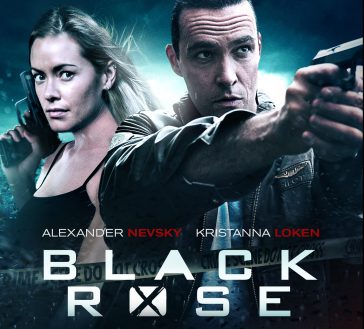
Alexander Nevsky’s latest film, Black Rose, blends horror, mystery, and action genres for a fresh take on cinematic Russian/American relations. His directorial debut gets rid of the tired, Cold War stereotype of the Soviet villain versus the US hero. Instead, Black Rose tells the story of Nevsky’s Russian Police Major, Vladimir Kazatov, working side by side with the LAPD to find a killer targeting young women in West Hollywood. This simple change in perspective facilitates a conversation about international diplomacy and the political realities of 2017, as we are confronted daily with questions about Donald Trump’s relationship to Vladimir Putin and whether Russia interfered with last year’s presidential election.

Continue reading

Cinephellas Podcast-Episode 5 (Luc Annest Interview)

Sans Acrobats:

A Review of NOLA Circus

By Christopher M. Rzigalinski

NOLA Circus, the latest film from writer/director/producer Luc Annest, focuses on an African American community in New Orleans. Friendships are tested, true love is put on trial, and a bunch of dudes get their asses kicked. Luc brings a French perspective to this dark comedy about two rival barbershops and their larger-than-life employees. I got the chance to talk with him about adjusting to cultural differences in the United States, looking beyond race to understand the film, and the importance of music in visual storytelling. After you listen to my conversation with Luc, check out NOLA Circus when it hits theaters on April 21st or when it hits VOD platforms and iTunes on April 25th.


Cinephellas Podcast-Episode 4 (Salt and Fire Screening)

A Fluffy Night Out:

The West Hollywood Screening of Salt and Fire

by Christopher M. Rzigalinski

At the end of my interview with Veronica Ferres a few weeks ago, she invited me to the London West Hollywood hotel off of West Hollywood’s Sunset Strip for a screening of Salt and Fire. Instead of writing  a review of the event, I wanted to reproduce it. This episode of the Cinephellas podcast is the story my experience and the personal journey it necessitated. I’m forced to confront questions of identity, recognizing the space between the way I see myself and how I’m seen (or unseen) within the Hollywood machine. While those neuroses are being sorted out, I try to pay attention to a David O. Russell-moderated Q & A with Veronica and writer/director of Salt and Fire, Werner Herzog. But the most trying part of the evening is figuring out why Mr. Herzog is as fluffy as llama fur.


Cinephellas Podcast-Episode 3 (Veronica Ferres Interview)

The Heart of the Matter:  An Interview with Veronica Ferres

by Chris Rzigalinski

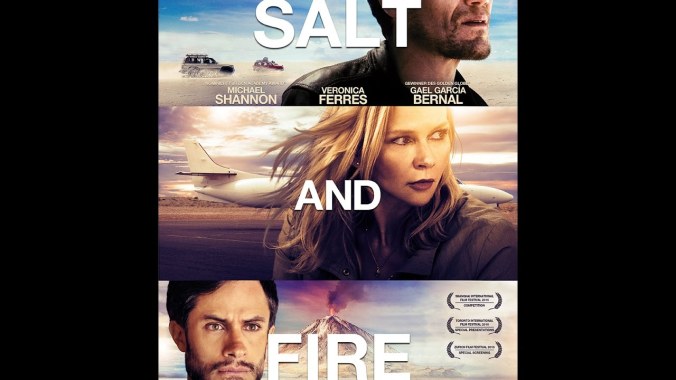
Veronica Ferres is an artist that uses her acting talents to find the essential values of each character she plays. Despite massive popularity in her native Germany that Newsweek magazine once compared to that of Sharon Stone’s in America, Veronica moved to Hollywood and takes on the leading role in Werner Herzog’s latest film, Salt and Fire, out on VOD platforms and iTunes April 4th and in theaters April 7th. In Herzog’s adaptation of Tom Bissell’s Pushcart Prize-nominated short story, “Aral,” Veronica plays “Laura,” an international scientist thrust against her will into a role where she has to make sense of an ecological disaster in Bolivia caused by a misguided CEO, portrayed with intensity by Michael Shannon. “Laura” is forced to confront the lines between quantifiable data and human empathy in order to save her own life and possibly the entire world. I talked with Veronica about the film’s power to begin conversations about environmental justice, being a muse for the legendary Herzog, and finding hope in times of desperation.


Review-Drifter (2017)

thedrifter

by Chris Rzigalinski

The unbound wanderer is a romanticized figure symbolizing freedom from the shackles of social norms and suffocating relationships, guided only by pride. Usually male, he’s a timeless archetype in American culture, but the best way to understand his journey for purpose is through film. Westerns (John Wayne’s “Rooster Cogburn”), wilderness epics (Robert Redford’s “Jeremiah Johnson”), and psychodramas (Edward Norton’s narrator in Fight Club) elevate this figure to mythic proportions. But Drifter, directed by Chris von Hoffmann, avoids falling cliche and gives audiences a fresh perspective on a classic narrative.

Continue reading

Good to the Last Fry! The Founder – Review (2017)

Image result for the founder movie poster

by Chris Rzigalinksi

Ray Kroc, the McDonald’s Corporation Founder and former CEO, is a pivotal yet obscure figure to the billions of people around the world that eat at his restaurant every day. His legacy is finally explored in a major motion picture with John Lee Hancock’s The Founder (2016). Michael Keaton follows award-winning performances in Birdman and Spotlight with a stunning take on Kroc that both shows the man as a product of his time and as someone constantly trying to transcend its limitations. Keaton’s finest talent as an actor is to bleed dry the unlikable qualities of his characters and locate their last remaining bits of redeeming integrity. He transforms writer Robert Siegel’s story from a script to a pilgrimage about an enigmatic visionary, who, to paraphrase Kroc’s famous words, was in the right place at the right time and did something about it.


The Founder gives us a deeper understanding of Ray Kroc by depicting him as a product of mid-20th century aspiration. Mobility is the major theme of the film, in both the physical and financial senses. We first meet Kroc as a milkshake machine salesman crisscrossing the United States in 1954. It’s important to remember the context of this moment in history. Nine years after World War II ended, America was an affluent nation. Government funding like the G.I. Bill helped returning soldiers afford college educations, stable homes, and reliable automobiles. Suburban communities sprang up across the nation. And the Federal Aid Highway Act would be signed by President Dwight Eisenhower in two short years. Cars and the freedom they afforded were the linchpin of this cultural revolution. Ray’s recognized that Americans were living at a faster pace and that food service had to keep up.


That awareness draws him to the McDonald brothers in San Bernardino, California. Dick, played by Parks and Recreation he-man Nick Offerman, and Mac, played by John Carroll Lynch, probably most recognizable for his roles in American Horror Story and TURN: Washington’s Spies, wow Kroc with their signature Speedy System. Derived from Henry Ford’s Model T assembly line process, the Speedy System dispenses with all wasted motion and turns out the most hamburgers possible per batch. A complete meal consisting of a hamburger, an order or french fries, and a Coke took only an astounding 30 seconds to reach customers’ hands. As the McDonald brothers explain their research methods to Ray, that wide-eyed mischievous Beetlejuice gaze creeps into Keaton’s eyes. The combination of innocence and calculation is Ray Kroc. We get to discover him along with Keaton through that one gesture.


In what I believe to be the most poignant scene of the film, Ray goes to a movie theater to see On the Waterfront, the 1954 Marlon Brando classic. The implicit reference is to Brando’s “Terry” lamenting his failed boxing career. We don’t hear the famous lines, “I coulda been a contender. I coulda been somebody, instead of a bum, which is what I am, let’s face it,” but the silent association with worrying about failure is even more powerful. We root for Ray to prevail. He goes back to the brothers with a powerful vision: McDonald’s as the next American church; the Golden Arches becoming just as iconic as Old Glory.


As a business venture hatches, we get to know the complexity of Ray Kroc. His vision is to franchise, franchise, and franchise. His drive to open the first McDonald’s in Illinois leads to a desire for expansion across the midwest. The brothers see this as overreaching, and it’s not long until conflict develops. Ray worries he can’t possibly stay true to the brothers’ core standards and still create a fast food empire. That’s when Kroc’s story really begins. Our trust in Ray is compromised by a series of decisions that blur the lines of ambition and exploitation. In the hands of any other actor, the character might become repulsive. However, Michael Keaton’s genius keeps us invested, like we were plunging into the empty box for that one last french fry.
The Founder deals with ethical issues like the value of a name, treatment of concepts versus people, and the struggle for self-preservation. It’s especially relevant in 2017, when our president’s ego-maniacal personality and take-no-prisoners business ethic helped him earn a seat in the White House. Michael Keaton pulls off the role with help from great performances by Laura Dern as his neglected wife, Linda Cardellini as his inspiration, and BJ Novak as the financial advisor that enabled his fortune. I give The Founder 5 out of 5 hairpieces. It’s a well-done biopic that educates us about an important pop culture phenomenon and remains entertaining from title to credits. Check it out in theaters now, and feel free to sneak in a Big Mac.